
Risk Modeling Experts: Help NASA Develop a Tool for Predicting Decompression Sickness
Risk Modeling Experts: Help NASA Develop a Tool for Predicting Decompression Sickness

NASA seeks statistical, machine learning, artificial intelligence, or other types of data-driven models that use existing datasets to predict the probability of astronauts developing decompression sickness during spacewalks, Moonwalks, and trips on planetary surfaces.
What Is Decompression Sickness?
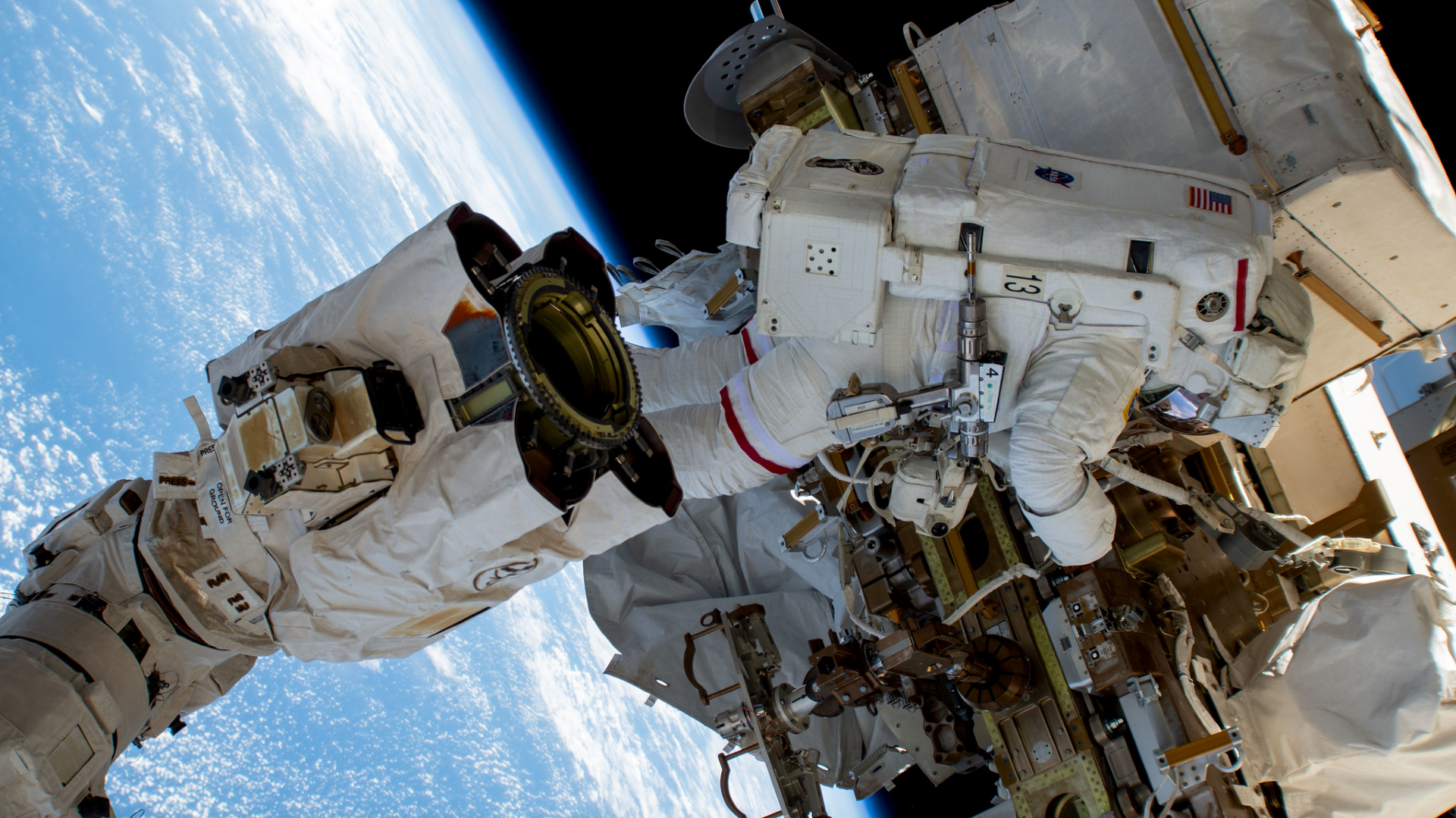
Decompression sickness is a condition in which a decrease in ambient pressure causes dissolved nitrogen in the body to form small bubbles in the bloodstream and other tissues. Scuba divers who ascend too quickly may experience this health complication, also known as “the bends.” Astronauts also may experience decompression sickness when transitioning from a pressurized spacecraft into a lower-pressure spacesuit to perform a spacewalk. If this occurs, it can compromise their health and ability to carry out critical tasks. To reduce the risk of developing decompression sickness, astronauts “prebreathe” a gas mixture with a high concentration of oxygen for several hours to remove nitrogen from their bodies before spacewalks.
NASA is focusing on two types of decompression sickness, which are classified based on the severity of their symptoms. Symptoms of type 1 decompression sickness include joint and muscle pain, itchiness, and skin discoloration. Type 2 decompression sickness is more severe, with symptoms that may include poor coordination, confusion, and difficulty breathing.
What We Are Seeking
To be selected, your risk-prediction models for decompression sickness need to:
1. Accurately predict the risk of developing type 1 and type 2 decompression sickness based on:
- Environmental conditions, including cabin and suit pressures, breathing gas composition, and ambient temperature.
- Individual factors, including sex, cardiovascular fitness, body composition, hydration status, and diet.
- Mission-specific factors, including ambulation, exercise, and intermittent and continuous pre-breathing scenarios.
2. Adhere to NASA’s Standard for Models and Simulations (NASA-STD-7009) or equivalent.
What We Need from You
Your risk-prediction models must include:
1. Documentation, such as raw source code, spreadsheets, and files for compiling, updating, and reconfiguring the model.
2. Final reports that detail methods, results, and discussion of findings. These reports should specifically include:
- A user guide for running the model.
- A description of datasets, why the datasets were used, and how they were tested.
- A lessons-learned section.
- Suggestions on how to decrease the risk of decompression sickness to an acceptable level.
3. A publication plan and PDF copies of referenced peer-reviewed publications, if appropriate.
Resources
NASA will provide to interested modeling teams:
- A dataset from previous NASA studies, including baseline health metrics, oxygen levels, cabin and suit pressure measurements, and more, that will be used to train the proposed model. NASA will withhold a subset of the entire dataset to independently evaluate the models.
- Contacts to publicly available datasets.
- A NASA subject matter expert who can answer questions about decompression sickness (see contact listed below for questions).
Do you need to be a decompression sickness expert to apply?
No. We welcome ingenious ideas from modeling experts. We’re looking for the new and novel — for example, models that are AI-based, computational, involve synthetic data, or use other methods. Bring us your creative models!
Demonstrations
Select programmers will demonstrate their models to NASA twice. The initial demonstration will follow a six-month period of model development. The second presentation will occur after applicants incorporate feedback from NASA into their work.
Deadline: Feb. 17, 2026.
Apply: Click here to submit your model proposals.
Questions: Email jadon.b.terry [at] nasa.gov.
The post Risk Modeling Experts: Help NASA Develop a Tool for Predicting Decompression Sickness appeared first on NASA Science.
About Author